Brand identity breakdown
Louis Vuitton Logo Analysis: A Monogram Built for 160 Years
Created in 1896 by Georges Vuitton to honor his father, the LV monogram combines Art Nouveau elegance with anti-counterfeit strategy. Today it stands as one of fashion's most recognized patterns—proof that heritage design can protect brand value while defining luxury aesthetics.
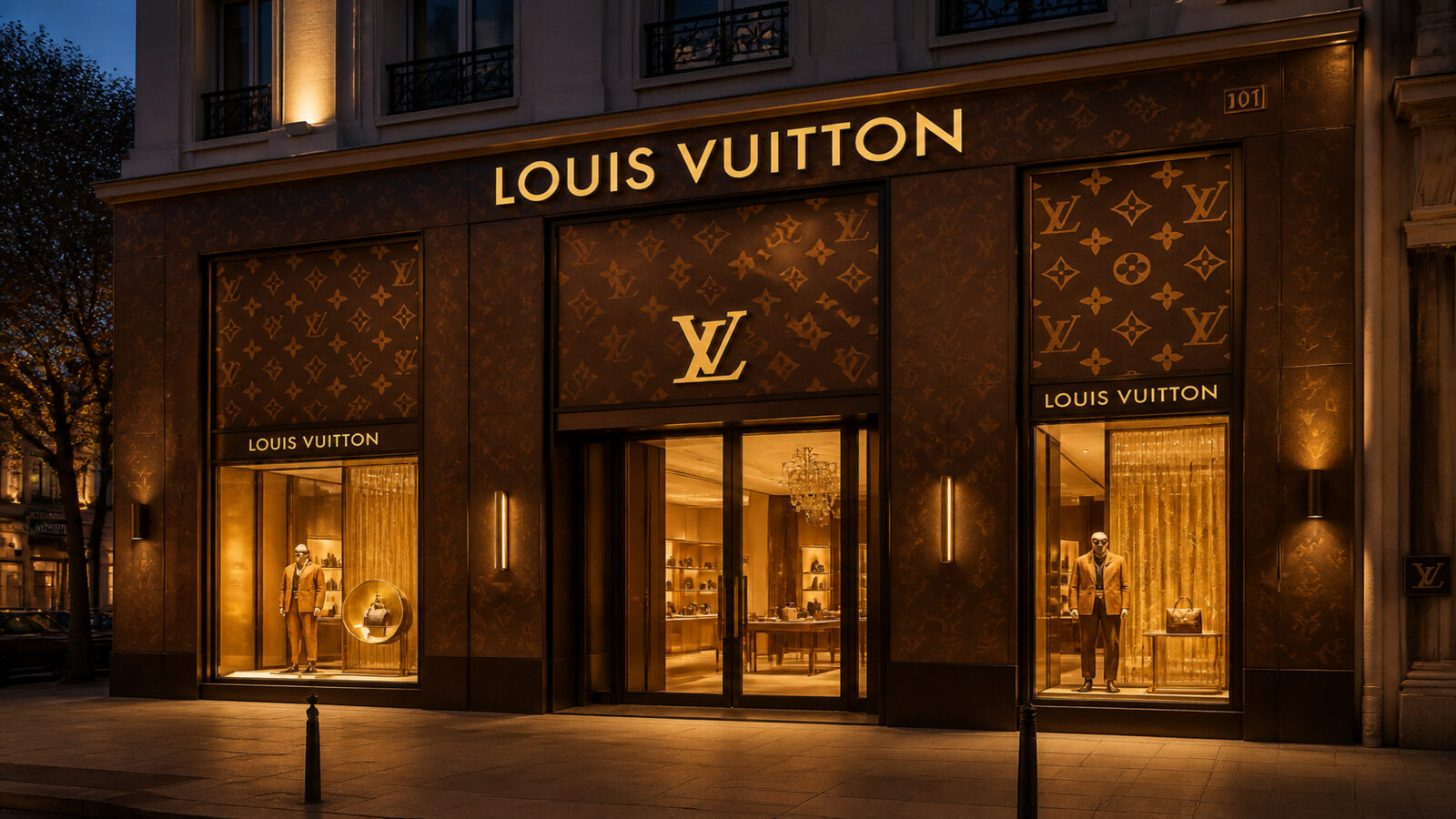
Founded
1854
Founder
Louis Vuitton
Headquarters
Paris, France
Business Scope
Luxury goods (luggage, fashion, accessories)
Design concept
A son's tribute that became a global language of luxury
When Louis Vuitton founded his trunk-making business in 1854, he revolutionized travel with flat-topped, stackable luggage designed for the emerging railway age. His innovative approach attracted elite clientele, but it also attracted imitators. By the 1890s, counterfeiters were copying his designs with increasing sophistication.
In 1896, Georges Vuitton—Louis's son and successor—created the LV monogram as both tribute and defense. The interlocking L and V letters honored his father's legacy while the complex floral and geometric motifs made reproduction difficult. This dual purpose—heritage encoding plus brand protection—gave the monogram strategic depth that purely aesthetic logos lack.
The design drew from two powerful influences: the Art Nouveau movement flourishing across Europe, and Japanese family crests (mon) that the Vuitton family encountered through their international clientele. This cross-cultural synthesis created a pattern that felt both contemporary and timeless, Western and Eastern, decorative and structural.
Why the LV monogram endures
- A founder-honoring design that encodes family legacy into visual identity, making authenticity part of the brand's DNA.
- Anti-counterfeit pattern complexity that turned practical protection into iconic aesthetics recognized worldwide.
- Cross-cultural design foundations from Art Nouveau and Japanese crests that transcend fashion cycles and geographic boundaries.
Key takeaways
Design strengths of the Louis Vuitton identity
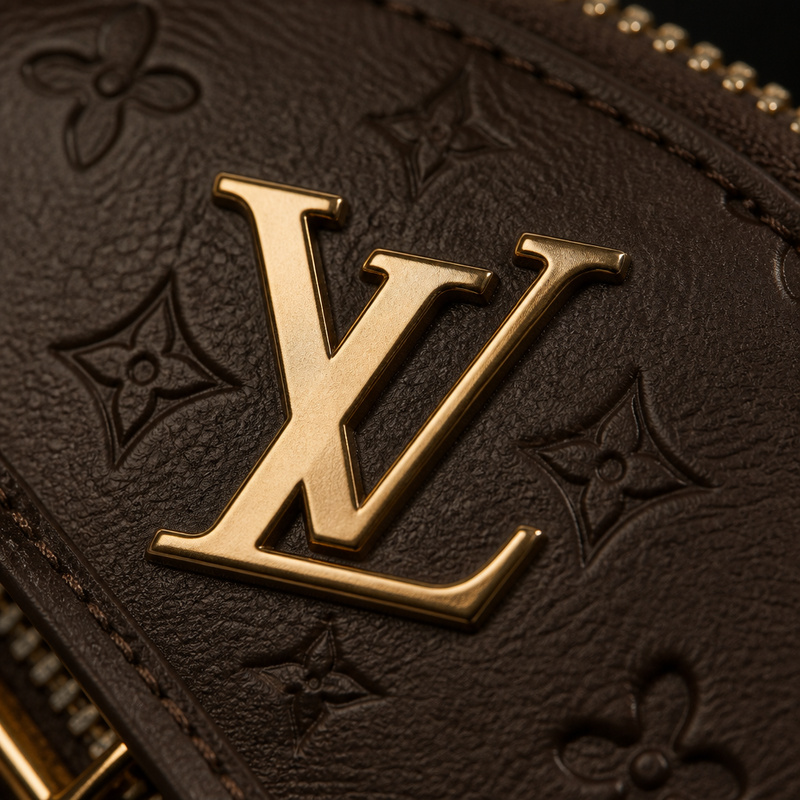
The Louis Vuitton logo system succeeds because it treats the monogram as both mark and material. The interlocking letters appear as standalone hardware, repeated patterns on canvas, embossed leather details, and woven textiles. That material integration is rare in luxury branding.
A Son's Tribute to His Father
Georges Vuitton created the LV monogram in 1896 to honor his father Louis. The interlocking letters bind family legacy to visual identity, making founder heritage the core of brand recognition for over 160 years.
Pattern as Brand Protection
The Monogram Canvas was designed to combat counterfeiting. Its complex floral and geometric motifs made reproduction difficult, turning anti-fraud strategy into one of fashion's most recognizable patterns.
Art Nouveau Meets Japanese Crests
The monogram draws from late 19th-century Art Nouveau and Japanese family crests. This cross-cultural design foundation gives the LV pattern timeless appeal that transcends fashion cycles.
Recognition Through Repetition
The LV monogram works as both standalone emblem and repeating surface pattern. When tiled across canvas, it creates brand density that communicates luxury before you even focus on individual elements.
Brown-Beige-Gold Harmony
The signature color palette of brown canvas, beige background, and gold accents creates warmth that distinguishes LV from the stark black-and-white minimalism of other luxury houses.
Material as Medium
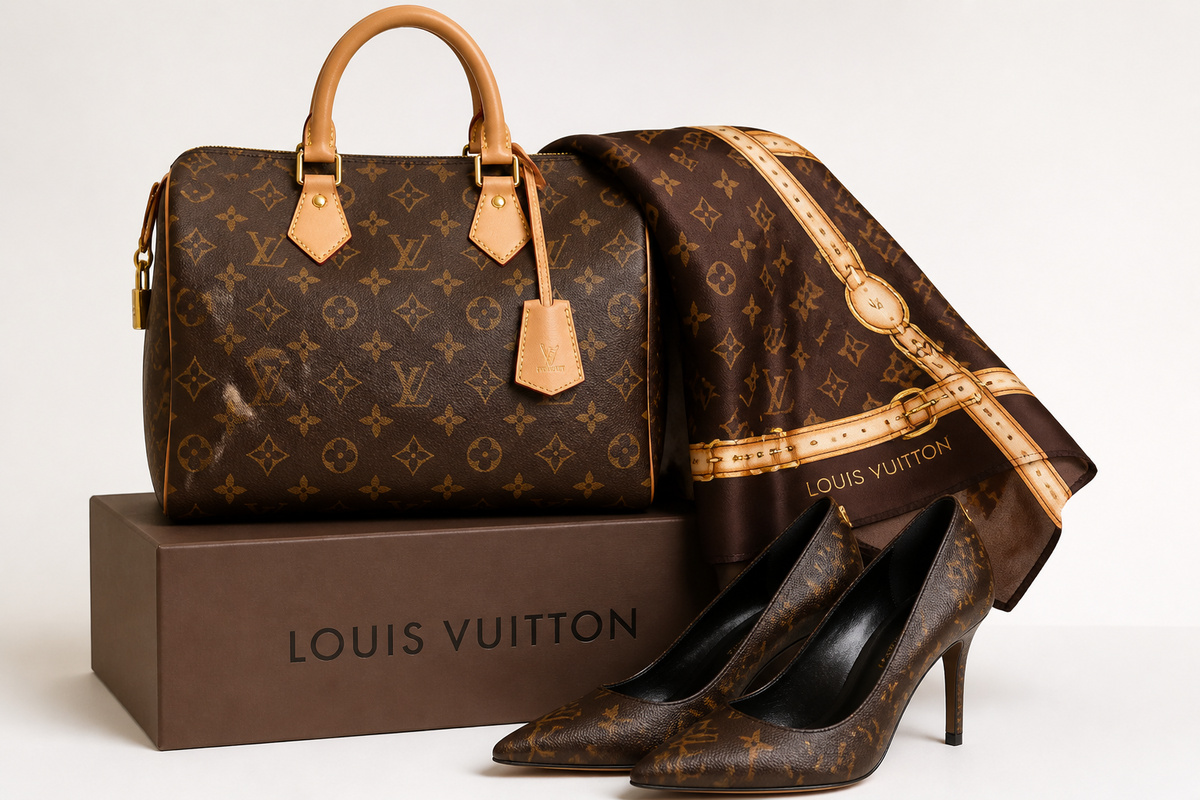
Unlike logos that sit on products as labels, the LV monogram often becomes the product surface itself. Monogram Canvas, Damier patterns, and embossed leather treat the logo as material, not just mark.
Color strategy
Brown, beige, and gold—the warmth of heritage luxury
Louis Vuitton's color palette stands apart from the black-and-white minimalism favored by many luxury houses. The signature brown-beige-gold combination creates warmth and accessibility while maintaining premium positioning. This choice reflects the brand's origins in travel goods—colors that suggest leather, journey, and craftsmanship.
The brown canvas with beige background provides neutral versatility that works across product categories, from luggage to handbags to accessories. Gold accents elevate the palette, adding metallic luxury that catches light and signals premium positioning without requiring bold color statements.
This warm, earthy approach distinguishes Louis Vuitton from competitors who favor stark monochrome or bold primary colors. The palette feels lived-in, approachable, and simultaneously expensive—a difficult balance that the brand has maintained across collaborations and limited editions.
Signature Brown
#8B6F47
The iconic brown of LV Monogram Canvas, signaling heritage and craftsmanship across luggage and leather goods
Luxury Gold
#D4AF37
Premium metallic accent that elevates the monogram on hardware, clasps, and limited-edition pieces
Canvas Beige
#F5E6D3
The light backdrop of the classic Monogram Canvas, providing contrast that makes the brown and gold elements pop
Deep Black
#1A1A1A
Used for formal wordmark applications and understated luxury products that favor discretion over pattern
Typography
Serif elegance that speaks of tradition
The Louis Vuitton wordmark uses a custom serif typeface that reinforces heritage and craftsmanship. The straight "V" overlapping the italicized "L" creates a distinctive lockup that's immediately recognizable even without the surrounding monogram pattern. The serif letterforms communicate stability, tradition, and permanence.
When the wordmark appears alongside the LV monogram, the hierarchy shifts based on context. On Monogram Canvas products, the repeating pattern dominates visual attention while the wordmark provides brand name clarity on labels and hardware. On formal communications and retail signage, the wordmark often takes precedence.
Evolution
From founder signature to pattern empire
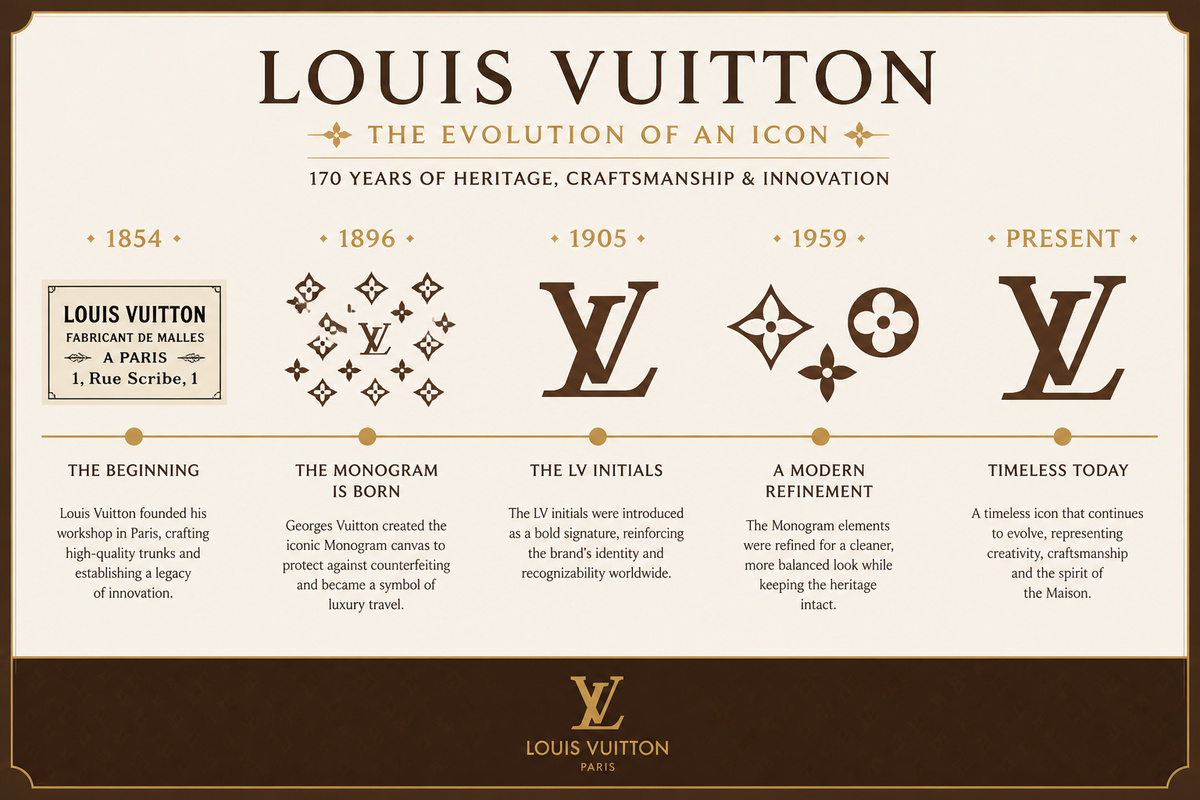
The Louis Vuitton logo evolved through strategic refinements rather than radical reinventions. Each change strengthened the connection between family heritage and brand identity while adapting to new markets and product categories.
1854-1896
Louis Vuitton founded his eponymous trunk-making business in Paris. The original mark was his stylized signature applied to luggage and travel trunks. This period established the brand's reputation for innovative, durable travel goods.
1896
Georges Vuitton created the iconic LV monogram to honor his father and combat counterfeiting. The design featured interlocking L and V letters alongside floral motifs and geometric patterns, inspired by Art Nouveau and Japanese family crests.
1896-1980s
The Monogram Canvas became the brand's signature, appearing on luggage, handbags, and accessories. The brown-and-beige pattern with gold accents established visual recognition across global markets.
1980s-1990s
Louis Vuitton expanded beyond luggage into fashion and accessories. The monogram appeared on new product categories while maintaining its original form, proving the design's adaptability.
2003-2019
Collaborations with artists like Takashi Murakami introduced colorful variations (Multicolore, Monogramouflage). These limited editions reinterpreted the classic monogram without replacing it, demonstrating controlled evolution.
2019-Present
Creative directors continue referencing the 1896 monogram while introducing subtle updates. The 'SINCE 1854' collection and artist collaborations show how the original design spans heritage and contemporary fashion.
Brand context
A monogram that becomes the product surface
Louis Vuitton's monogram occupies a unique position in luxury branding: it functions simultaneously as logo, pattern, and material. Unlike marks that sit on products as labels, the LV often becomes the product surface itself—woven into canvas, embossed into leather, cast into hardware. This integration is what makes the Louis Vuitton identity system so powerful.
A handbag covered in repeated LV patterns communicates brand identity through visual density. A single embossed logo on leather communicates refinement and restraint. Both use the same underlying design, adapted to context. That flexibility lets Louis Vuitton span heritage luggage and contemporary fashion without fragmenting its visual identity.
Creative directors from Marc Jacobs to Nicolas Ghesquière have worked within this system rather than replacing it. They've applied the monogram to new categories—streetwear collaborations, digital applications, artist partnerships—while maintaining its core recognition. That adaptability is what makes the LV a truly timeless design.
Application system
Logo as material, pattern as product
The LV monogram behaves differently than most luxury logos. It appears as standalone hardware on handbags, as repeated pattern across luggage and accessories, as embossed detail on leather goods, and as woven textile in apparel. That material flexibility is central to Louis Vuitton's brand density.
This application system creates multiple recognition points across a single product. A Louis Vuitton bag might feature LV hardware, monogram-patterned canvas, and embossed leather trim—all using the same core visual vocabulary. That consistency builds brand recognition through repetition without requiring different logos for different product categories.
Visual evidence
The LV monogram across product, time, and application
These visuals show how the Louis Vuitton logo behaves in real brand contexts: from evolution timeline to product integration.
Keep exploring
Related internal reads
Compare Louis Vuitton's monogram approach with other luxury fashion identity systems.
Gucci Logo Design
Compare Louis Vuitton's monogram to Gucci's interlocking GG and see how two heritage houses approach founder-initial branding differently
Chanel Logo Design
Explore how Chanel uses interlocking CC letters to create luxury recognition, contrasting with LV's pattern-first approach
Prada Logo Analysis
See how Prada's wordmark-first identity differs from Louis Vuitton's monogram-centric visual system
Sources
Reference links used for factual grounding
These sources anchor the timeline, founding facts, and design history of the Louis Vuitton identity.
Louis Vuitton Official Heritage
Official brand timeline from 1854 founding through modern creative direction and global expansion
Harper's Bazaar: LV Monogram History
In-depth look at the monogram's creation, the 1896 design process, and contemporary reinterpretations
Louis Vuitton Wikipedia
Comprehensive encyclopedia entry covering brand history, corporate structure, and cultural impact
Need more logo inspiration?
✨ Ready to craft a timeless brand identity? Get inspired by Louis Vuitton's heritage monogram and design your luxury logo today!
The Louis Vuitton monogram shows how founder initials can become a global symbol of luxury through strategic design. Explore more fashion logos to understand what makes heritage brand marks work across materials, eras, and markets.